
At Swan Meadow, our prints come to life through a mix of carefully chosen machinery, handmade processes, and community-built software. Some of the tools we use are decades old, carrying long histories rooted in photography, publishing, and printmaking traditions. Others are newer innovations created by contemporary artists and designers looking to make creative work more accessible. No matter their age, each tool brings something unique to our process — whether it’s precision, texture, flexibility, or character. In this blog, we’re sharing a few of our favorite items from the studio and exploring the stories behind them.
If you’re curious about printmaking, photography, or creative production, these are tools worth knowing — and maybe even adding to your own toolkit someday.
The Cult Favorite Printer That Blends Speed, Texture, and Creativity
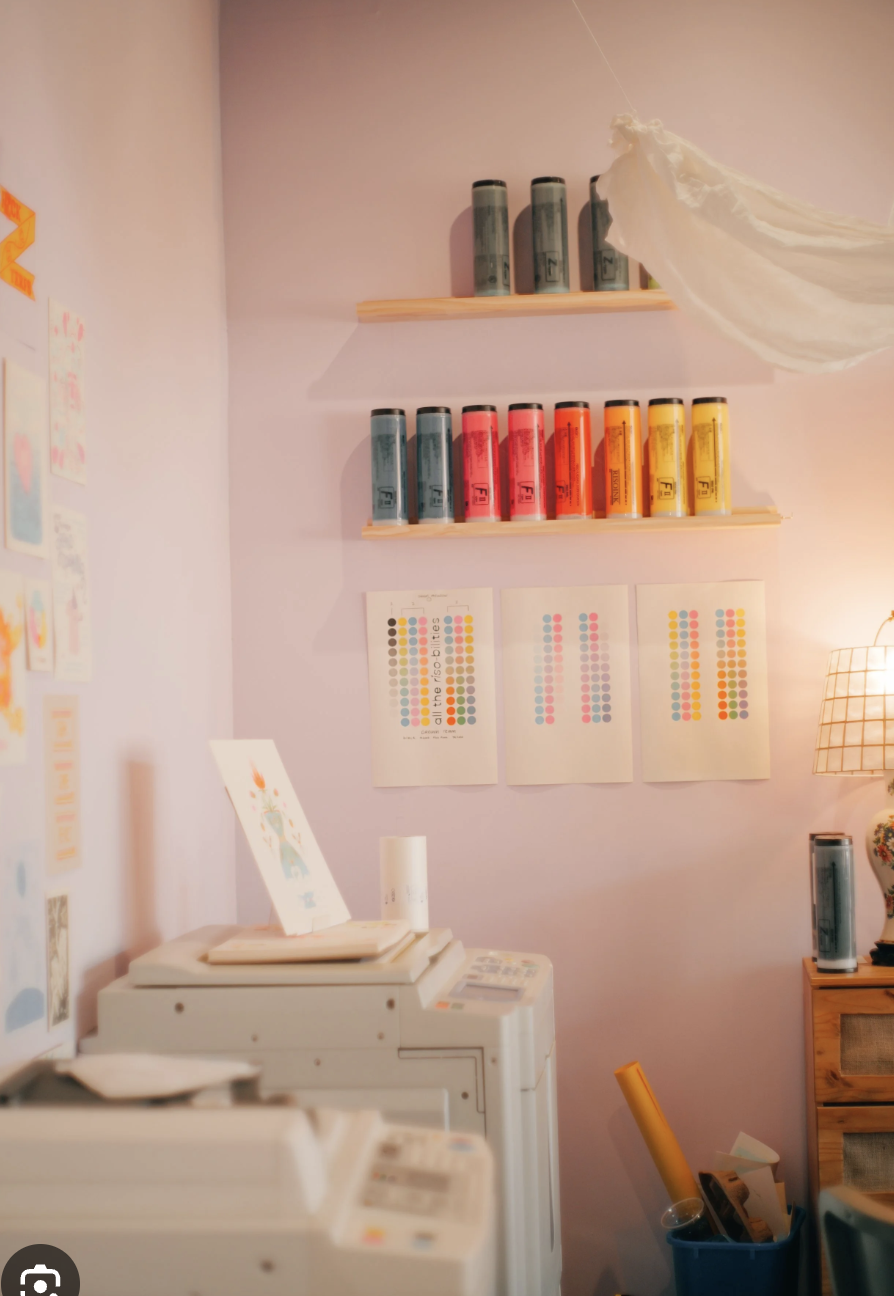
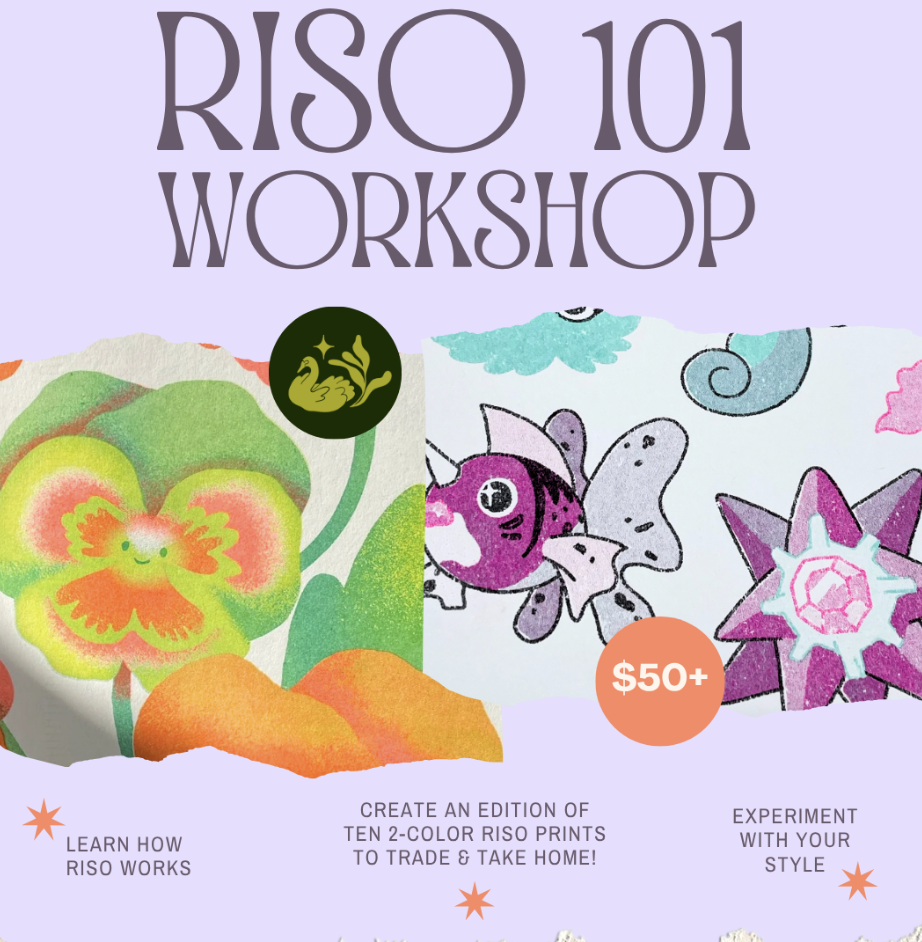
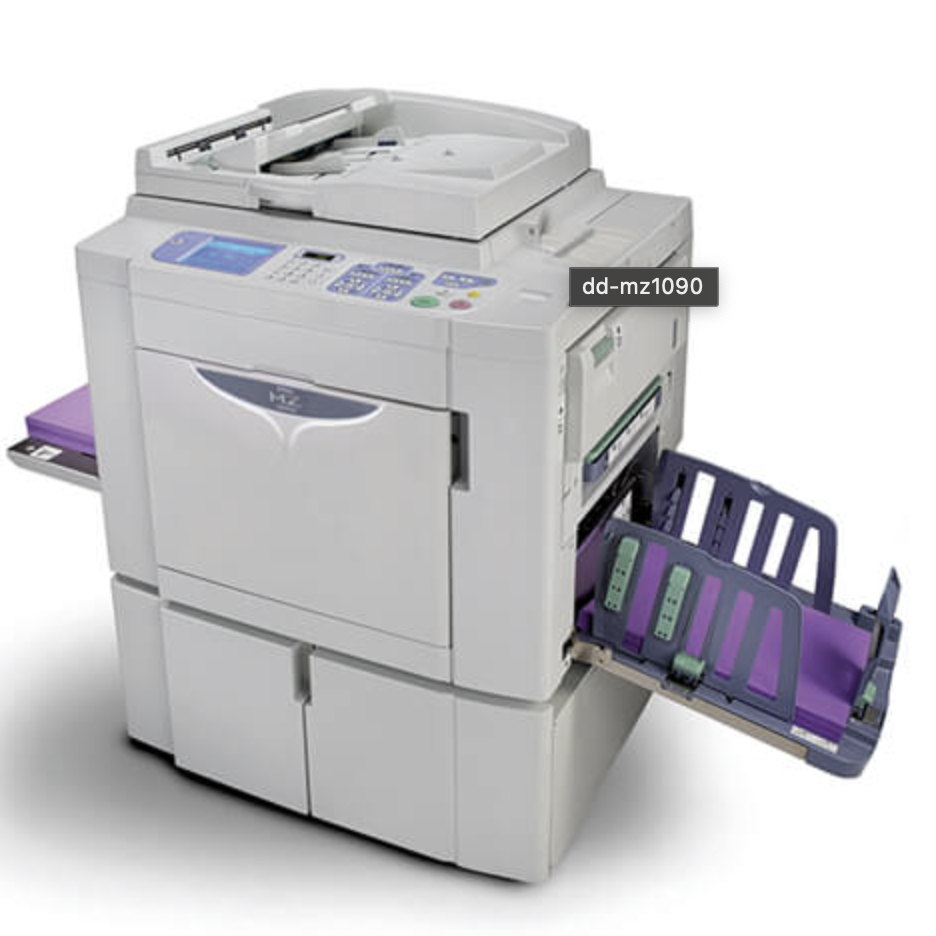
The Risograph machine is a beloved staple in many independent print shops, prized for both its efficiency and its unmistakable charm. First released in Japan in 1980 by the Riso Kagaku Corporation, the Risograph was designed for high-volume printing at a fraction of the cost of traditional copiers or printers. While newer models can function like modern network printers, the machine still carries a wonderfully analog spirit. In our shop, we work with two generations of Risographs — one from 2005 and another from 2020 — each with its own personality, quirks, and rhythm. Risograph printing is especially popular among artists, zine makers, and designers because of its rich ink textures, vibrant spot colors, and slightly imperfect registration that gives every print a handmade feel. Though originally built for practicality, the RISO has become an icon of creative printing culture, blending old-school mechanics with contemporary design in a way that continues to inspire printers and artists alike.
The Small Tool Behind Every Crisp Fold
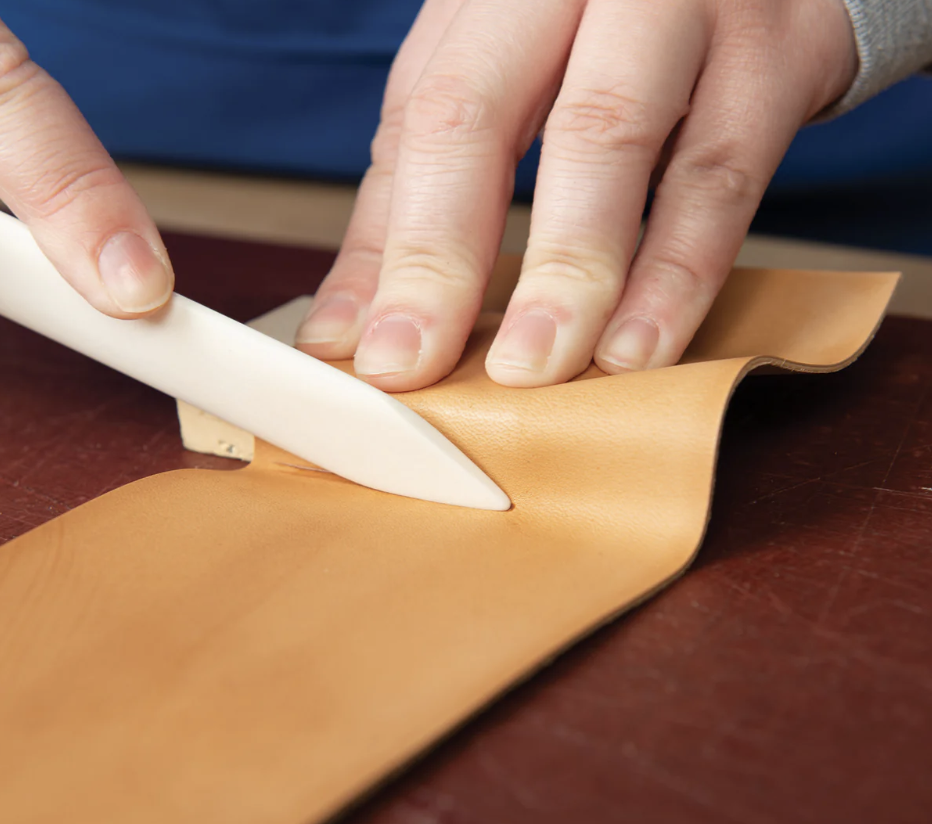
The bone folder may look simple, but it has played an essential role in paper arts and bookmaking for thousands of years. Traditionally made from polished animal bone, this handheld tool is designed to create sharp folds, smooth creases, and clean edges without tearing delicate paper. In our shop, bone folders are especially useful when folding zines, helping transform flat sheets into neatly assembled booklets with crisp, professional edges. The tool’s history stretches back to ancient Egypt, where scribes likely used smooth bone implements to handle papyrus scrolls with care and precision. Over time, cultures across the world adapted the tool to their own materials and traditions — from Chinese paper makers working with silk and handmade paper, to medieval European monks crafting illuminated manuscripts by hand. Variations made from horn, bamboo, and carved wood can still be found across Africa and Asia today. Though small enough to fit in your palm, the bone folder carries centuries of craftsmanship, connecting modern printmaking and bookbinding practices to a long global history of storytelling through paper.
The Community-Built Tool Powering Modern RISO Printing
While Risograph printing has deep roots in analog design, tools like Spectrolite show how the RISO community continues to innovate in the digital age. Spectrolite is a free, open-source computer program created by artists and printmakers specifically to simplify file preparation for Risograph printing. The software helps users separate full-color images into grayscale layers for different ink colors, generate halftone textures, and format zines or booklets with ease — processes that can otherwise feel technical and time-consuming. What makes Spectrolite especially charming is that it was built by people within the RISO community who wanted to make the craft more accessible to others. Originally popular among Mac users, the program recently released a Windows update, opening the door for even more artists and designers to experiment with RISO printing. In many ways, Spectrolite reflects the spirit of Risograph culture itself: collaborative, creative, and driven by a love for making printed work feel tactile, vibrant, and human.
The 1997 Scanner That Still Captures Incredible Detail
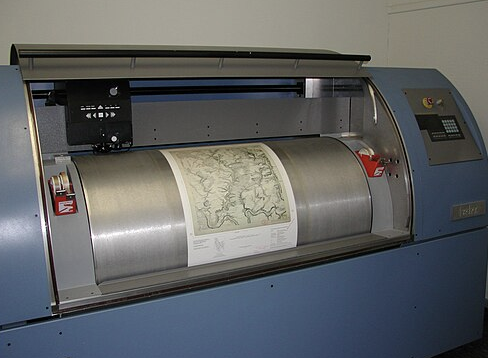
At first glance, the Howtek 4500 Drumscanner from 1997 looks less like a modern scanner and more like a piece of darkroom equipment from another era. Unlike flatbed scanners, drum scanners use a rotating acrylic tube — or “drum” — where film negatives or transparencies are carefully mounted by hand before scanning. Originally designed specifically for film, the Howtek captures images using analog light and highly sensitive photomultiplier tubes, producing extraordinary detail, smooth tonal range, and remarkably clean shadow areas. The process is slow, precise, and deeply hands-on, which is part of its enduring appeal. In many ways, working with a drum scanner feels similar to traditional darkroom printing: careful preparation, attention to light, and a respect for the physical material itself. Even decades later, machines like the Howtek remain beloved among photographers and printmakers because of the unmatched depth and sharpness they can pull from film — preserving details that many modern digital systems still struggle to replicate.
The Modular Film Camera Built to Last
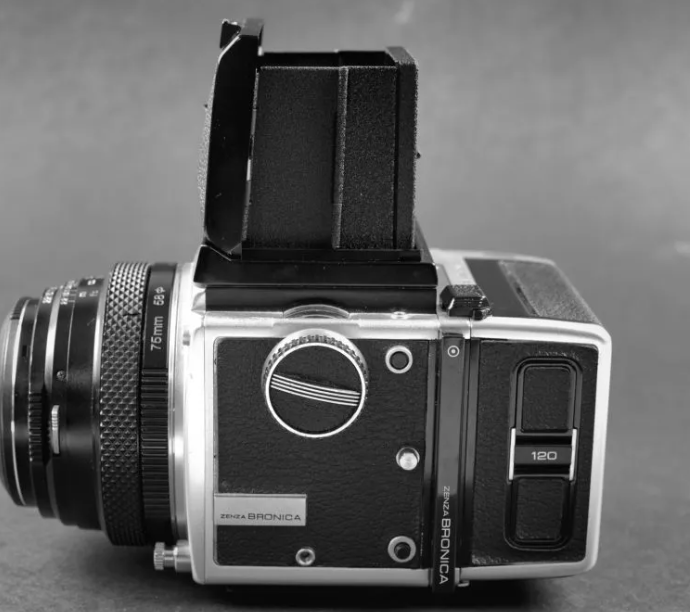
Released in 1976, the Bronica ETR is a Japanese medium-format film camera that earned a reputation for being both highly adaptable and incredibly reliable. Unlike many cameras of its time, the ETR was designed as a modular system, meaning photographers could swap out film backs, lenses, viewfinders, and accessories depending on the needs of a shoot. This “mix-and-match” approach made the camera especially forward-thinking for the era and gave photographers a level of flexibility that felt remarkably modern. Built with professional use in mind, the Bronica featured a leaf shutter system that allowed for flash synchronization at all shutter speeds — a major advantage for studio and portrait photography. Even decades later, many photographers still trust the ETR because of its durability, precision, and beautifully sharp images. At the same time, these cameras have become increasingly rare in the United States, and finding someone skilled enough to repair them can be difficult. That scarcity only adds to their charm: the Bronica ETR represents a thoughtful era of camera design where craftsmanship, repairability, and long-term use were built directly into the machine itself.
The Free Editing Software Inspired by the Darkroom
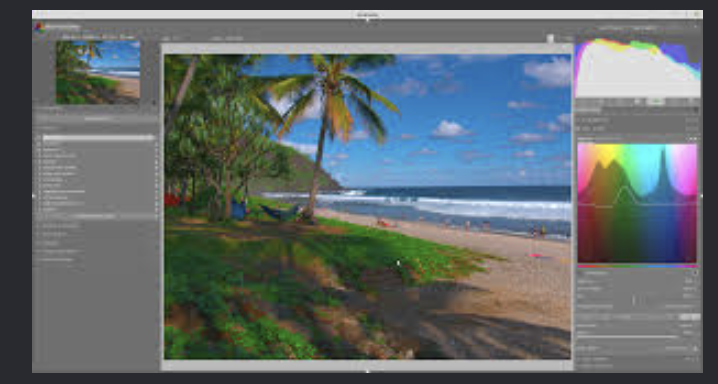
Darktable is a free, open-source photography program designed for photographers who want powerful editing tools without the cost of commercial software. Often described as an alternative to Adobe Lightroom, Darktable combines digital organization with advanced photo development tools, allowing users to manage, edit, and enhance raw image files all in one place. Its name is a nod to the traditional photographic darkroom, where film images were carefully developed by hand before the digital era. The program functions like a modern version of that process: photographers can sort through images on a virtual “lighttable” before moving into editing tools that mimic the precision and control of darkroom techniques. Beyond its technical capabilities, Darktable is especially beloved because it is community-driven and freely accessible, reflecting the collaborative spirit that runs through many contemporary photography and printmaking spaces.
This blog was co-written with the help of Arkayla TH of Wildflower Communications. To learn more about her blogging services, reach out to arkaylath@gmail.com.
